
AGW Fellowship Recipients 2026
AGW is pleased to announce the 2026 AGW Fellowships awardees:
Rosie Coleman
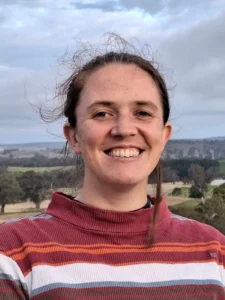
Rosie Coleman
BARBARA HALE FELLOWSHIP
Rosie Coleman
Flinders University and the Flinders Health and Medical Research Institute (FHMRI)
Summary of academic and professional background
Rosie Coleman is a PhD candidate at Flinders University and the Flinders Health and Medical Research Institute (FHMRI). She specialises in molecular biology and fundamental neuroscience, focusing on understanding how brain cells age. Rosie is a firm believer in bridging the gap between research and the public, ensuring research relevance through engagement with affected communities, as well as ongoing involvement in STEM mentoring, outreach, and public science communication.
Project Summary
Rosie’s PhD project focuses on understanding what makes the brain vulnerable to age-related decline, like memory loss. She wants to uncover and understand why some brains stay sharper for longer as we age and aims to use this knowledge to improve the ageing experience for all. This fellowship will enable Rosie to travel to the MRC Laboratory of Molecular Biology in Cambridge, UK, to learn advanced imaging and data analysis techniques. This will not only speed up her project but also equip her with new skills to bring back to Australia, contributing to the local neuroscience research community.
Grace Peters
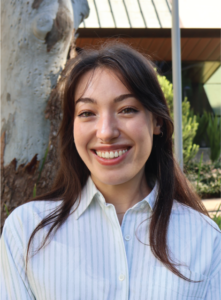
Grace Peters
BARBARA HALE FELLOWSHIP
Grace Peters
Academic background:
Grace Peters is a PhD candidate at UNSW in the School of Biomedical Sciences. She holds a Bachelor of Biomedical Science with First Class Honours from the University of Technology Sydney, earning the Dean’s Award for Academic Excellence. Her research focuses on memory T cell dynamics in liver-stage malarial disease to inform next-generation vaccine development.
Project Summary:
Malaria is a life-threatening parasitic disease spread by mosquitoes that remains a major global health challenge, infecting millions of people each year. Before symptoms appear, the parasite multiplies in the liver, where a small number of parasites can increase up to 10,000-fold. Because this stage occurs before illness begins, it offers an ideal opportunity for vaccine intervention. While a specialised group of liver-resident T cells is known to kill infected liver cells, the precise mechanisms they use remain unclear. This study will use CRISPR gene-editing technology to uncover the pathways these T cells use to control infection, guiding the design of next-generation malaria vaccines.
Rachel Caines
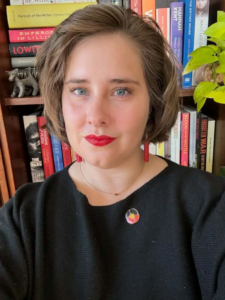
Rachel Caines
JENNIFER STRAUSS FELLOWSHIP
Rachel Caines - School of History - Australian National University
Summary of academic and professional background
Rachel Caines is a historian specialising in Indigenous Australian defence of Country, with particular focus on the legacies of Indigenous involvement in the First World War. Her PhD challenges homogenised narratives of Indigenous Australian veteranhood through the first nationwide analysis of Indigenous veterans’ engagement with state-run repatriation schemes after the war. She is the author of eight peer-reviewed and trade publications, and has presented her research nationally and internationally to diverse academic and public audiences.
Project Summary:
The AGW Jennifer Strauss Fellowship will enable Rachel to access correspondence files created by the Aboriginal Protection Boards across Australia during the interwar period. These files provide important insights into the role of the Aboriginal Protection Boards in influencing and challenging the ways Indigenous veterans were able to engage with repatriation schemes and benefits. Through the Fellowship, Rachel will be able to gain a deeper understanding of the interaction between different state departments and Indigenous veterans than would be possible from her original archival source material alone, and engage with records traditionally absent from military histories of Australia.